Ready, Steady, Stay Safe: How to Enjoy Riverfest Without Letting Safety Protocols and On Water Emergency Plans Slow You Down
Attention: Du love the buzz of Saint Albans Riverfest—the music, the flotilla, the community vibe. Interest: Du also want to head home in one piece. Desire: imagine a day where everyone knows what to do, communication flows, and emergencies are handled calmly. Action: read on and use this guide to lock in Safety Protocols and On Water Emergency Plans for a smooth, safe Riverfest.
Before we dive into the step-by-step safety stuff, take a moment to gather any party planning notes, seating diagrams, and visuals Du’ll be using on the day—having those on hand makes it far easier to integrate safety checks and brief your crew without scrambling at the dock.
If Du’re setting up canopies, seating areas, or boat decorations and want to keep things secure and safe, check this helpful guide on Boat Setup for Seating Canopies and Decor which shows sensible layouts and anchoring tips. For broader event logistics—like permits, slip assignments, and coordinating with local authorities—consult the Organizing a Boat Party resource to make sure safety and fun are planned side-by-side. Finally, if Du want a practical sequence for when to run briefings, safety checks, and launch windows, the timeline in Planning a Saint Albans Waterfront Boat Party Timeline helps slot every safety action into the right moment so nothing important gets missed.
Essential Safety Protocols for Saint Albans Riverfest Boaters
Safety at Riverfest starts before your boat slips off the trailer. When people talk about Safety Protocols and On Water Emergency Plans, they often think “big boats, big problems”—but the truth is, most incidents are small, preventable, and come down to preparation and common sense. Below are the essentials every boater should know and follow.
Pre-Event Preparation
Think of this as your pre-flight checklist. You wouldn’t fly without checking the instruments—don’t launch without these steps either.
- Register with event organizers. If something happens and your boat is unaccounted for, the faster organizers know who’s missing, the faster help can be coordinated.
- Perform a mechanical check: fuel level, engine oil, cooling system, battery charge, steering response, and navigation lights. Start the engine, let it idle, listen for unusual noises.
- Ensure every person onboard has a correctly sized PFD and knows where it is. Practice donning inflatable jackets so nobody fumbles in a panic.
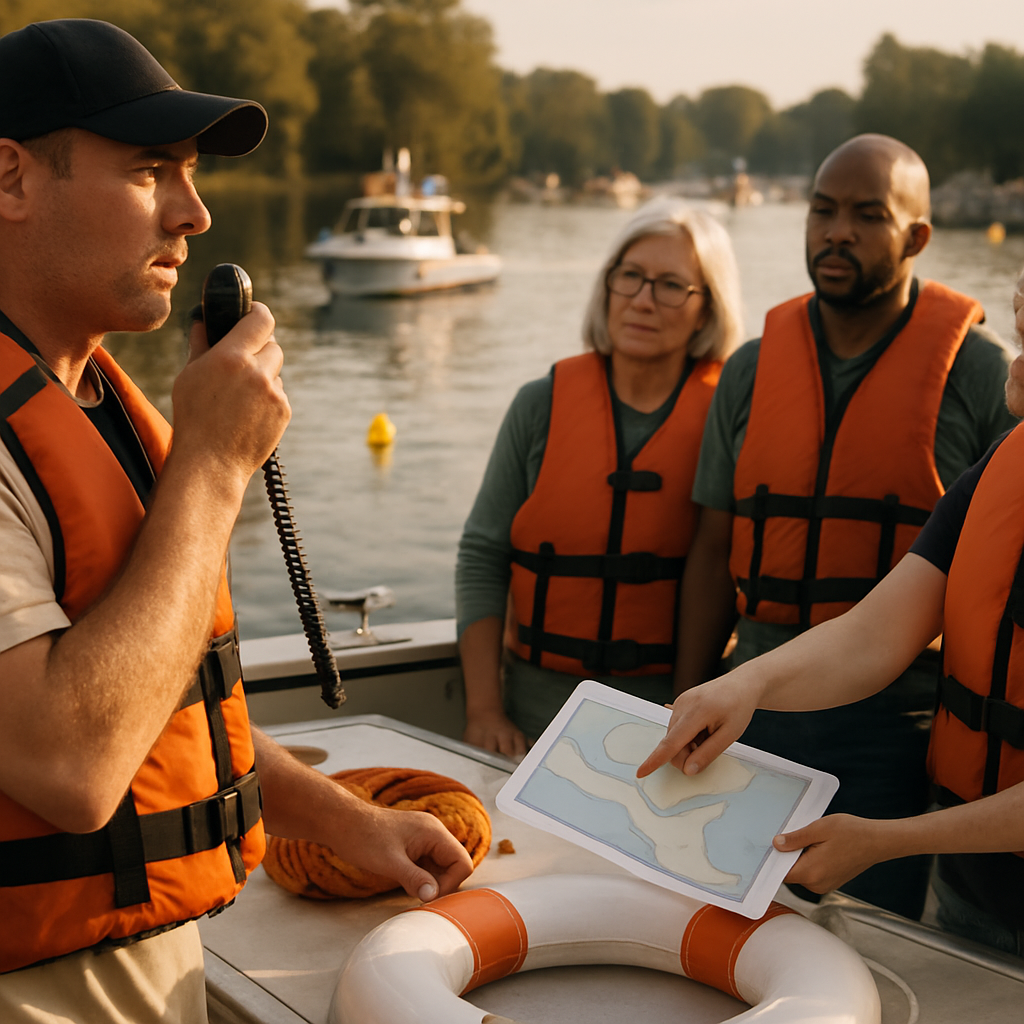
- Assign simple roles before you leave the dock—skipper, lookout, communications lead. Keep it clear: who handles the radio? Who watches the map?
- Review the event map. Memorize or note no-go zones, swimmer areas, and the designated anchoring spots.
On-Water Conduct
Respect the river and your fellow boaters. Simple habits prevent many incidents.
- Follow no-wake and slow-speed zones. A wake that tips a kayak can escalate into a rescue situation quickly.
- Keep a safe distance. Two lengths or more in crowded areas gives you time to react.
- Be courteous: give smaller and non-motorized craft room. Use your horn or VHF to politely announce intentions—“Passing on your starboard.”
- If you anchor, pick a place out of the main channel and mark it visually. Avoid blocking exits or emergency lanes.
- Monitor alcohol. Appoint sober skippers and shore contacts. Alcohol impairs judgement and reaction times; it’s not worth the risk.
Briefing and Signage
Short and frequent communication saves lives.
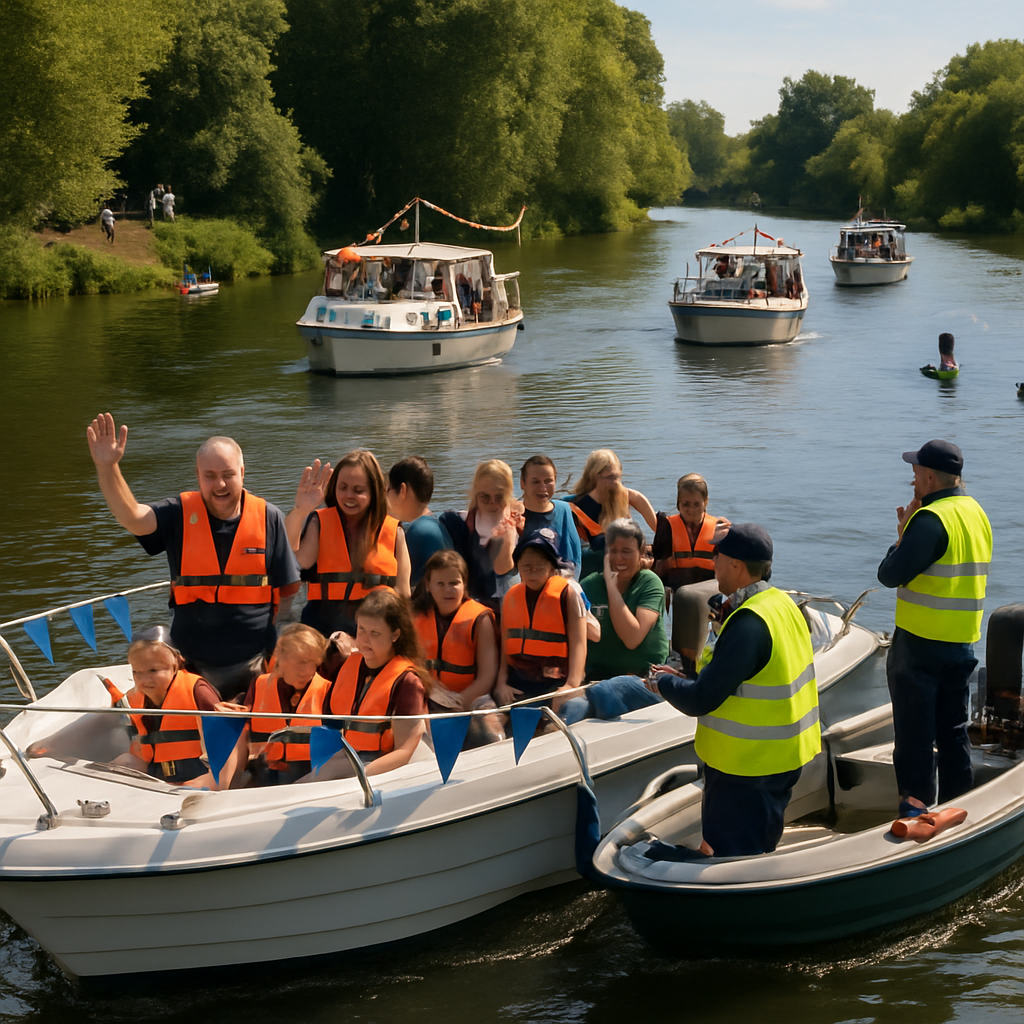
- Conduct a 5–10 minute safety briefing at launch. Cover radio channels, local hazards, and muster points.
- Make quick-reference cards or provide a QR code leading to event emergency info—people will scan rather than memorize, and that’s okay.
On-Water Emergency Plans: Clear Roles and Rapid Response
When something goes wrong on the water, the first minute is critical. Effective Safety Protocols and On Water Emergency Plans give structure: who leads, who acts, and how resources are deployed. Chaos is the enemy of rescue; clarity is your ally.
Core Emergency Principles
- Stop the risk expanding: don’t attempt a heroic maneuver that puts more people at risk.
- Communicate immediately: location, nature of incident, number of people involved. The clearer the info, the faster responders can help.
- Stabilize the casualty: get them out of danger, treat immediate threats, and keep them warm and calm.
- Rely on trained responders for advanced care. On-the-spot first aid buys time until EMS arrives.
Suggested Role Assignments
Pre-assigning roles allows a small team to act like a well-rehearsed crew. Here’s a practical template tailored to Riverfest:
| Role | Responsibilities |
|---|---|
| Incident Commander | Coordinates response, contacts shore command, allocates resources. |
| Safety Boat Lead | Leads on-water rescue, manages tow operations, ensures rescuer safety. |
| Medical Lead | Provides first aid/triage and liaises with EMS for evacuation. |
| Communications Officer | Manages VHF and phone calls, logs updates and directions. |
| Traffic Manager | Directs traffic flow around the scene, establishes exclusion zones. |
Step-by-Step Emergency Response (On-Water)
Follow this sequence; it’s designed to minimize confusion and maximize safety.
- Identify and mark the location—use GPS coordinates and local landmarks. If you can, drop a marker buoy.
- Call for help—immediately state your position, the number of people affected, and the nature of the incident on the event’s working channel.
- Stabilize the scene—stop any sources of ongoing danger (e.g., shut down leaking fuel, move people away from entanglements).
- Deploy rescue aids—throw bags, life rings, ladders. Make rescuers wear PFDs and attach a kill switch or safety tether.
- Administer first aid within competency—control bleeding, protect airway, treat for shock while awaiting EMS.
- Evacuate to shore or a safe transfer point when it’s safe—coordinate with EMS for transport and handover.
- Record everything—times, actions, witness names, environmental conditions. This helps with reporting and future prevention.
Communication and Coordination: Channeling Help When It Matters
Clear communication is the backbone of any successful Safety Protocols and On Water Emergency Plans. When the radio crackles, and the river is noisy, how you say it matters. Think of radio calls as mini-scripts—short, clear, and unemotional.
Recommended Communication Tools
- Marine VHF radio: primary on-water communications. Ensure at least one VHF on every safety boat and one onshore command post.
- Mobile phones: for shore-to-shore contact and 911/EMS calls. Program local emergency numbers into everyone’s phone.
- Whistles and air horns: use for immediate nearby alerts. Agree on three short blasts to indicate urgent attention.
- Loudhailers and megaphones: useful to give instructions to multiple anchored boats or crowds.
- Flag signals and lights: especially important at dusk or night. Share meanings during the pre-launch briefing.
Event Radio Plan Essentials
Establish a simple, robust radio plan and make sure everyone hears it.
- Designate a primary working channel and a backup—publicize both before launch.
- Use plain language. Avoid acronyms unless everyone knows them. Start with vessel name and location.
- Reserve distress channels for true emergencies. Routine coordination belongs on the working channel.
Sample Radio Call (Practice Makes Perfect)
Here’s a short script Du can rehearse during the briefing:
- “Riverfest Control, River Runner 3, we have a person in the water at landmark ‘Old Mill’—approx. 51.034 N, 0.854 W. One adult, unresponsive, requesting immediate assistance. We are starting rescue. Need medical evac.”
That short script tells responders what they need to know. Calm, clear, and complete—you’ll be amazed how fast help can move when the message is clean.
Weather, Water Conditions, and Risk Assessment for Riverfest
The river is beautiful—and moody. Weather and water can shift fast. Integrating weather checks into your Safety Protocols and On Water Emergency Plans helps you make smart go/no-go choices.
Monitoring and Decision Points
- Check forecasts at 72, 24, and 3 hours before the event, then again right before launch. Note wind speed, precipitation, lightning risk, and river flow data.
- Set clear cancellation thresholds: for example, sustained winds over 20 knots, frequent lightning within 10 miles, visibility under 500 meters, or river flow exceeding locally designated safe limits.
- Designate a Weather & Water Officer who can call for pause or cancellation. Make their authority known in briefings so there’s no confusion.
Common River Hazards to Watch
Some hazards are obvious—others sneak up on you.
- Strong currents near bridges and narrow channels that can trap or pin small craft.
- Floating debris like logs and branches after storms.
- Unmarked shallow areas or shoals that can strand a boat suddenly.
- Microclimate-driven gusts that hit only parts of the river, causing unexpected heel or drift.
Simple Risk Assessment Template
Use a quick scoring system: Likelihood (1–5) x Severity (1–5) = Risk Score. Anything above 12 needs targeted mitigation. Evaluate the top risks and list practical controls—more safety boats, mandatory PFDs, or temporary no-anchor zones.
Equipment and Gear Checklist: Life Jackets, Throw Bags, and More
If Safety Protocols and On Water Emergency Plans are the brain, your gear is the body—both are needed. A properly equipped boat multiplies your chance of a safe outcome.
Mandatory Gear for Every Vessel
- PFD for every person: properly fitted and USCG-approved where applicable. Inflatable jackets are great but check maintenance status.
- Throwable flotation (Type IV or equivalent) within easy reach—don’t tuck it away under a seat.
- Sound signaling device: a whistle for each person and a dedicated horn on the boat.
- Visual distress signals: flares or electronic distress lights; check expiry dates on pyrotechnics.
- Anchor with enough rode length for river bottom and expected tide or flow.
- Fire extinguisher sized for your vessel and fuel type; inspect pressure gauges and seals.
Recommended Additional Gear
- Throw bag with floating line—practice your throw beforehand. You’d be surprised how often people miss when it counts.
- VHF radio with spare battery and waterproof case. Consider a waterproof handheld as backup.
- Comprehensive first aid kit tailored to on-water injuries—include gloves, trauma dressings, and a CPR shield.
- Tool kit and spare parts—impeller, belts, hose clamps, duct tape, cable ties. Minor fixes can keep you afloat.
- Bilge pump or manual bailer. Boats leak slowly sometimes; you don’t want to learn that lesson without a pump.
- Flashlights and headlamps with spare batteries—waterproof preferred.
- Warm blankets and extra dry clothes—hypothermia is sneaky and can happen even on mild days if someone gets wet.
Maintenance and Inspection Checklist
Gear is only as good as the last time you checked it. Schedule simple inspections before Riverfest:
- Inspect PFDs for tears, degraded foam, broken buckles, and ensure inflation mechanisms are serviceable for inflatable types.
- Test radios and verify programming of working and emergency channels.
- Verify expiry on flares and replace expired items.
- Start engines and run briefly—catch bad smells, leaks, or overheating before you get into the middle of the river.
- Practice throw bag usage and man-overboard recovery with your crew—muscle memory beats panic every time.
Pre-Launch Safety Brief: A Quick Script You Can Use
Five to ten minutes can be the most important minutes of your day. Keep the briefing short, clear, and to the point. Here’s a script you can adapt:
- Welcome: remind everyone that safety comes first and the event is all about community fun.
- Locations: review launch sites, anchor zones, swimmer/no-go areas, and shore muster points.
- Communications: announce the working VHF channel and a backup. Remind people of the emergency phone number for shore-based EMS.
- Roles: point out safety boats, incident commanders, and who to contact if something goes wrong.
- Weather: brief current forecast and what would trigger a suspension of activities.
- Emergency actions: person overboard technique, basic first aid expectations, and evacuation points.
- Etiquette: respect wildlife, keep noise reasonable near neighborhoods, and pack out what you pack in.
Training, Drills, and After-Action Learning
No plan is perfect on paper. The real test is practice. Encourage your local crews to train regularly. First aid, CPR, VHF radio drills, and man-overboard practices pay dividends. After an incident, do a calm, constructive debrief: what worked? what didn’t? update your Safety Protocols and On Water Emergency Plans accordingly.
Key Training Recommendations
- First Aid and CPR for primary boat operators and safety volunteers.
- Man-overboard drills and towing practice on calm days.
- Tabletop exercises with your incident command team to rehearse decision-making under pressure.
- Radio etiquette workshops so distress calls are clear and concise.
FAQ — Common Questions About Safety Protocols and On Water Emergency Plans
Q: Are life jackets mandatory for Riverfest participants?
Yes. Du must have a properly fitting PFD for every person onboard, and organizers usually require them to be accessible at all times. For children and non-swimmers, a snug, USCG-approved life jacket is non-negotiable. Inflatable jackets are fine if maintained, but inspect inflation mechanisms before the event. Wearing a PFD when conditions worsen or during night activities is a smart rule to follow.
Q: What should Du do immediately if someone falls overboard?
First, shout to alert others and point at the person to keep visual contact. Have a crew member throw a buoyant aid while the skipper slows and turns into the person’s wake, keeping the bow away from them. Assign one person to maintain sight and call for help on the working VHF channel. Bring the person aboard using a ladder or scoop technique if safe, then assess breathing and bleeding, and keep them warm.
Q: Which radio channel should Du use to call for help?
Use the event’s published working VHF channel for coordination and the standard distress channel if immediate emergency assistance is required and responders aren’t on the working channel. During briefings, memorize the primary and backup channels and ensure your radio is tuned and tested. Keep calls short: vessel name, location, nature of emergency, and number of people affected.
Q: Is alcohol allowed during Riverfest, and how does it affect Safety Protocols and On Water Emergency Plans?
Alcohol is often permitted socially, but impaired operation of a vessel is both illegal and dangerous. Designate sober skippers and enforce a low-tolerance policy for operators. Safety teams should watch for risky behavior and have clear enforcement steps—warning, escort to shore, or contacting authorities if needed. Remember: alcohol reduces reaction time and decision-making—exactly what Du don’t want on the water.
Q: How do I register my boat and what information is required?
Register through the event’s organizer portal or at the registration desk before launch. Typical details include vessel name, length, skipper contact, passenger count, emergency contact ashore, and planned anchorage area. Registration helps safety teams track expected vessels and speeds up reunification in case of incidents—don’t skip it.
Q: What happens if the weather turns bad during the event?
Follow the Weather & Water Officer’s instructions immediately. If winds increase, visibility drops, or lightning is nearby, reduce speed, head for safe shelter, or return to shore as directed. Safety Protocols and On Water Emergency Plans should include pre-defined thresholds for suspension or cancellation; Du and your crew must comply to avoid escalating risk.
Q: How are safety boats and mutual aid coordinated at Riverfest?
Organizers coordinate volunteer safety boats, local marine units, and marinas before the event and share a contact sheet and map. Safety boats patrol high-traffic areas and respond to calls on the working channel. If Du see an incident, call the working channel and provide clear location and details so the nearest safety boat can respond. Mutual aid agreements with local authorities speed medical evacuations when required.
Q: After an incident, how should Du report it and what follow-up occurs?
Report the incident to event control and, if applicable, to local authorities. Provide a written incident report with times, location, witness names, weather, and actions taken. Safety teams will debrief to capture lessons and update future Safety Protocols and On Water Emergency Plans; organizers may share a summary with participants to improve community preparedness.
Wrapping Up: Keep It Simple, Keep It Shared
Here’s the bottom line: Safety Protocols and On Water Emergency Plans don’t need to be a thick manual of impossible rules. Start with simple, shared protocols—pre-launch briefings, basic gear checks, a clear radio plan, and designated roles. Practice a few drills, and make sure everybody knows where to find help. When Du share those responsibilities across the community, Riverfest stays vibrant and safe.
So before Du head out to enjoy the flotilla, take five minutes to run through the checklist with your crew, double-check the weather, and make sure your VHF is set. Du’ll be doing your part to keep Saint Albans Riverfest fun, friendly, and—most importantly—safe.
For organizers: adapt these Safety Protocols and On Water Emergency Plans to local regulations, update contact lists annually, and keep the community looped in. Safety is a team sport—let’s play together.